
Sergeant Tommy Prince is one of Canada’s most decorated Indigenous war veterans. Tommy Prince, a member of the Ojibway Nation, was born in 1915 in Petersfield, Manitoba. He became a master marksman and tracker while hunting and trapping with his father on the Brokenhead Reserve.
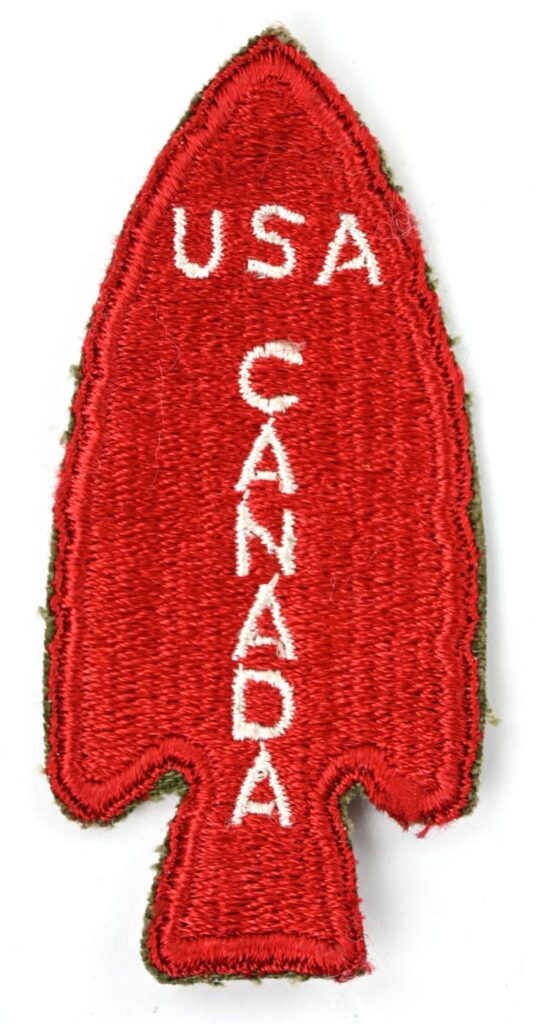
Prince was finally accepted into the Canadian military in 1940 after being rejected due to discrimination. He was one of a select group of Canadians chosen to train with an elite joint American-Canadian commando unit to form a specialized assault team; the 1st Special Service Force, known as the “Devil’s Brigade”.
In Italy and France with the 1st Special Service Force, Prince used his tracking and marksman skills in several covert actions that resulted in military success. Prince was known to put on his moccasins from his rucksack and go scouting alone in the dark of night.
The 1st Special Service Force was deployed to Italy in 1943. During the attack on Monte Majo, Sergeant Tommy Prince single-handedly eliminated the German gun emplacements on the lower and middle slopes, allowing the summit of Monte Majo to be taken without a single shot being fired.
On another occasion, during the 1944 Anzio campaign, near Littoria, Italy, Sergeant Tommy Prince was sent forward to report the location of German assembly areas and artillery positions. Acting alone, Prince laid communication wire from an abandoned farmhouse where he was hiding back to the Special Service Force position. During an artillery barrage the wire was cut and Prince, dressed as a farmer weeding his garden was later able to repair the line while pretending to tie his shoelaces. Prince carried on this deception by shaking his fist at both the Germans and the Allies. He continued his reports and four German batteries were taken out of action. Prince spent three days alone behind enemy lines. Sergeant Tommy Prince was awarded the Military Medal for his heroic actions during this campaign.
There are numerous recorded accounts of Sergeant Tommy Prince’s bravery and selflessness during other military actions.
When the fighting in France ended, Prince was awarded the Military Medal and the American Silver Star with Ribbon by King George VI at Buckingham Palace.
Tommy Prince also served in Korea but again faced overt discrimination.
Once back in Canada, Indigenous military members, including Sergeant Tommy Prince, were refused the same benefits as other Canadian veterans.
Sergeant Tommy Prince is also remembered as an Indigenous advocate who fought for equality and Indigenous rights. Sergeant Tommy Prince died in Winnipeg in 1977 and is buried in Brookside Cemetery, Winnipeg.
Sergeant Tommy Prince was awarded a total of 11 medals. His decorations and medals are: The Military Medal, the American Silver Star with Ribbon, the 1939-1945 Star, the Italy Star, the France-Germany Star, the Defence Medal, the Canadian Volunteer Service Medal with Clasp and the War Medal. Sergeant Tommy Prince was awarded the Canada-Korea Medal and the United Nations Service Medal (Korea) posthumously. He also became entitled to the Canadian Volunteer Service Medal for Korea created in 1991.