Category: display

  • Sergeant Tommy Prince

    Sergeant Tommy Prince is one of Canada’s most decorated Indigenous war veterans. Tommy Prince, a member of the Ojibway Nation, was born in 1915 in Petersfield, Manitoba. He became a master marksman and tracker while hunting and trapping with his father on the Brokenhead Reserve.

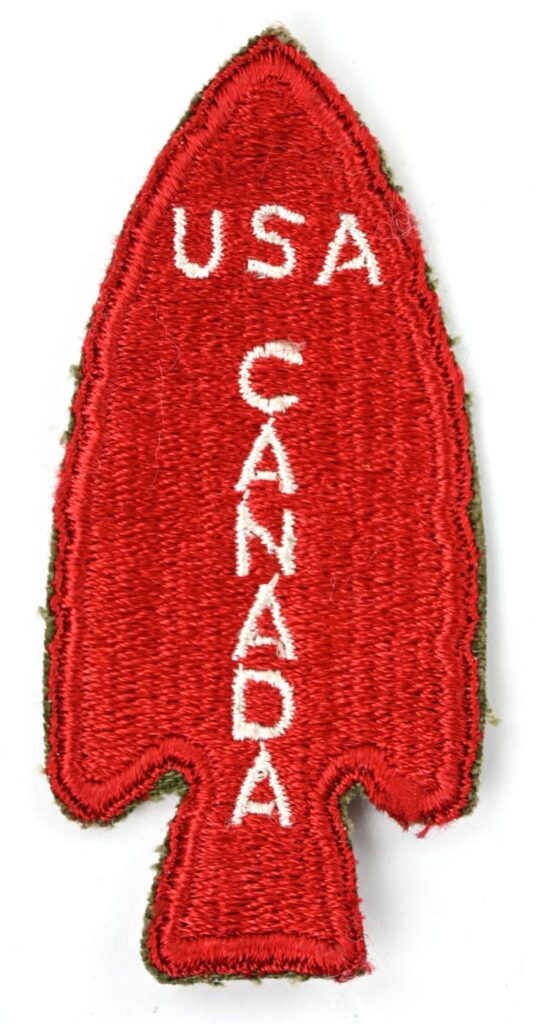
                Prince was finally accepted into the Canadian military in 1940 after being rejected due to discrimination. He was one of a select group of Canadians chosen to train with an elite joint American-Canadian commando unit to form a specialized assault team; the 1st Special Service Force, known as the “Devil’s Brigade”.

                In Italy and France with the 1st Special Service Force, Prince used his tracking and marksman skills in several covert actions that resulted in military success. Prince was known to put on his moccasins from his rucksack and go scouting alone in the dark of night.

                The 1st Special Service Force was deployed to Italy in 1943. During the attack on Monte Majo, Sergeant Tommy Prince single-handedly eliminated the German gun emplacements on the lower and middle slopes, allowing the summit of Monte Majo to be taken without a single shot being fired.

                On another occasion, during the 1944 Anzio campaign, near Littoria, Italy, Sergeant Tommy Prince was sent forward to report the location of German assembly areas and artillery positions. Acting alone, Prince laid communication wire from an abandoned farmhouse where he was hiding back to the Special Service Force position. During an artillery barrage the wire was cut and Prince, dressed as a farmer weeding his garden was later able to repair the line while pretending to tie his shoelaces. Prince carried on this deception by shaking his fist at both the Germans and the Allies. He continued his reports and four German batteries were taken out of action. Prince spent three days alone behind enemy lines. Sergeant Tommy Prince was awarded the Military Medal for his heroic actions during this campaign.

                There are numerous recorded accounts of Sergeant Tommy Prince’s bravery and selflessness during other military actions.

                When the fighting in France ended, Prince was awarded the Military Medal and the American Silver Star with Ribbon by King George VI at Buckingham Palace.

                Tommy Prince also served in Korea but again faced overt discrimination.

                Once back in Canada, Indigenous military members, including Sergeant Tommy Prince, were refused the same benefits as other Canadian veterans.

                Sergeant Tommy Prince is also remembered as an Indigenous advocate who fought for equality and Indigenous rights. Sergeant Tommy Prince died in Winnipeg in 1977 and is buried in Brookside Cemetery, Winnipeg.

                Sergeant Tommy Prince was awarded a total of 11 medals. His decorations and medals are: The Military Medal, the American Silver Star with Ribbon, the 1939-1945 Star, the Italy Star, the France-Germany Star, the Defence Medal, the Canadian Volunteer Service Medal with Clasp and the War Medal. Sergeant Tommy Prince was awarded the Canada-Korea Medal and the United Nations Service Medal (Korea) posthumously. He also became entitled to the Canadian Volunteer Service Medal for Korea created in 1991.
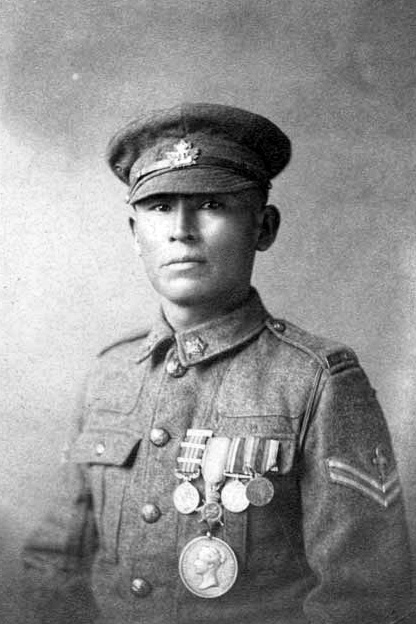
  • Corporal Francis Pegahmagabow

    Francis Pegahmagabow was born on March 9, 1891, on the Parry Island Reserve in Ontario where he learned traditional skills such as hunting, fishing, and traditional medicine.

                  At the outbreak of World War I, Pegahmagabow volunteered for service with the Canadian Expeditionary Force in August 1914. In early October 1914 he was deployed overseas with the 1st Canadian Infantry Battalion of the 1st Canadian Division – the first contingent of Canadian troops sent to fight in Europe.

                  In April of 1915, Pegahmagabow’s company fought in the Second Battle of Ypres, where the Germans used chlorine gas for the first time on the Western Front. Following the battle, he was promoted to lance corporal. His battalion took part in the Battle of the Somme in 1916, during which he was wounded in the left leg. He received the Military Medal for carrying messages along the lines during these two battles.

                  In November of 1917, Corporal Pegahmagabow earned a Bar to his Military Medal for his actions in the Second Battle of Passchendaele. During the fighting, Corporal Pegahmagabow played an important role when the battalion’s reinforcements became lost. He helped lead the reinforcements to their allocated spot in the line.

                  During the Battle of the Scarpe in August of 1918, Pegahmagabow was involved in fighting off a German attack at Orix Trench near Upton Wood. His company was almost out of ammunition and in danger of being surrounded. Pegahmagabow braved heavy machine gun and rifle fire by going into no-man’s land and brought back enough ammunition to defend the position. For these actions he received a second Bar to his Military Medal.

                  World War I ended in November of 1918 and in 1919 Pegahmagabow returned to Canada. He was credited with killing 378 Germans and capturing 300 more.  He was first awarded the Military Medal in 1916 and earned two Bars for his excellence as a sniper and scout in the battles of Ypres in 1915, Passchendaele in 1917, Amiens in 1918 and Second Battle of Arras in 1918. On discharge, he was also awarded the 1914–15 Star, the British War Medal, and the Victory Medal.

                  After the war, Francis Pegahmagabow became an advocate for Indigenous rights and self-determination. He died in August of 1952 at Parry Island, Ontario.

  • A/Sergeant Charles Henry Byce

    Charles Henry Byce was born in Ontario in 1916. He was educated at the Saint John’s Residential School in Chapleau, Ontario.

                  In 1940, Charles Byce joined the Lake Superior Regiment which was later attached to the 4th Armoured Brigade in the 4th Canadian Armoured Division. The unit left for Britain in 1942 and more training. The unit landed on the beaches of Normandy in July 1944 and advanced across France and Belgium towards Germany.

                  Acting Corporal Byce was awarded the Military Medal for his actions while deployed in the Netherlands in January, 1945. He was charged with protecting a group of soldiers who were to go behind enemy lines to capture prisoners for interrogation. When the patrol came under fire, Byce moved forward alone and ended the attack with grenades, ensuring the success of the mission.

                  Acting Sergeant Byce was awarded the Distinguished Conduct Medal for his actions in March 1945 south of the Hochwald Forest. As the few remaining men from his Company were attempting to retreat, Byce remained behind, shooting at the German tanks to give the men time to reach safer ground.

                  In July, 1945, Acting Sergeant Charles Byce was presented with both the Military Medal and The Distinguished Conduct Medal by King George VI at Buckingham Palace in London, England. He is one of only nine Canadian soldiers to be awarded both these medals.

                  At the end of the war, Byce returned to Canada and settled in Espanola, Ontario where he worked at a pulp and paper mill.

                  Charles Byce died in 1994 in Newmarket, Ontario.

  • Private Herman Essie

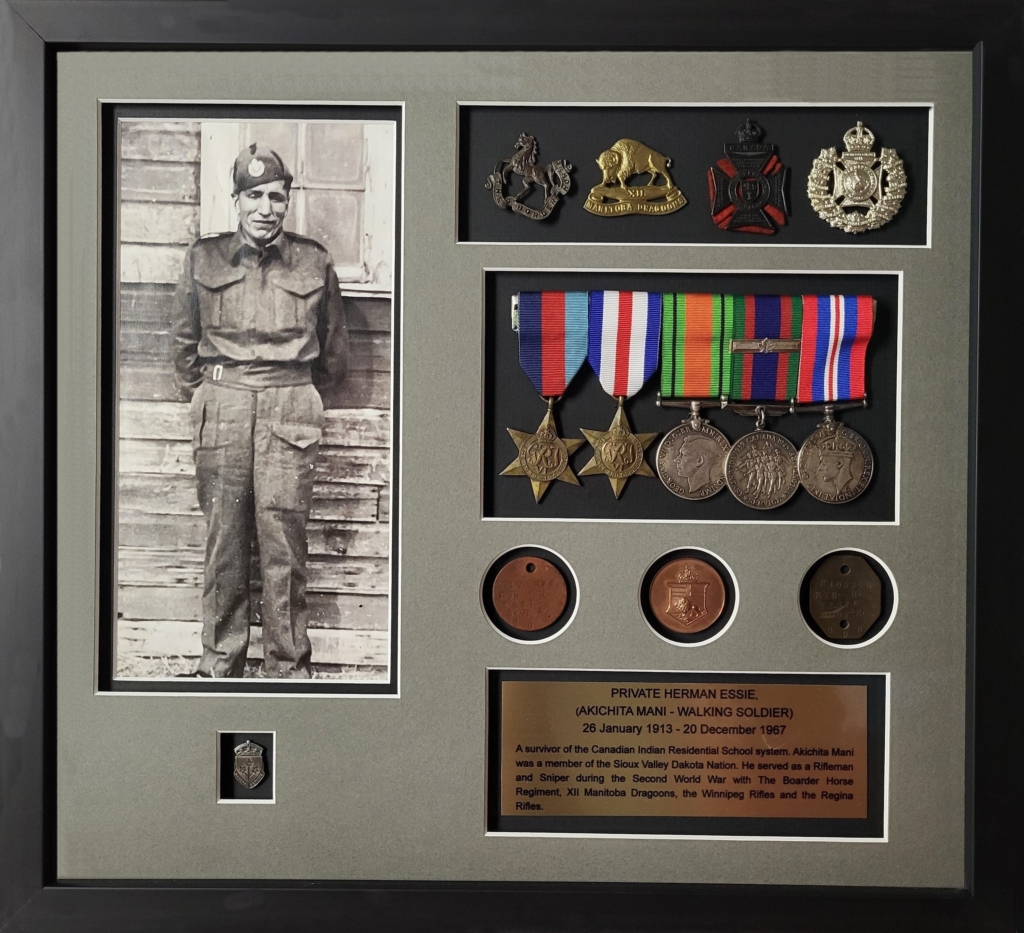
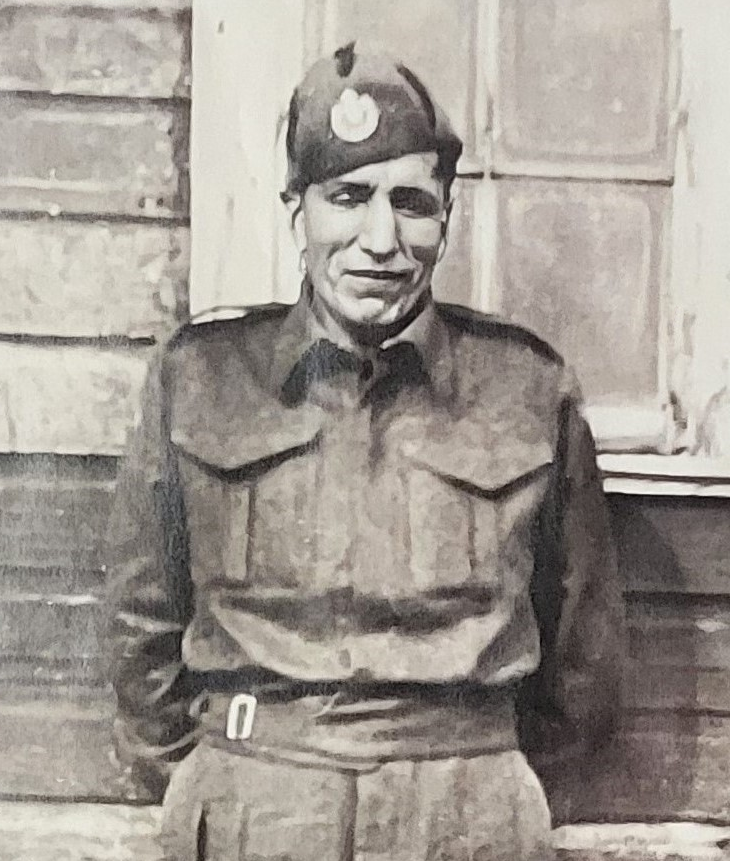
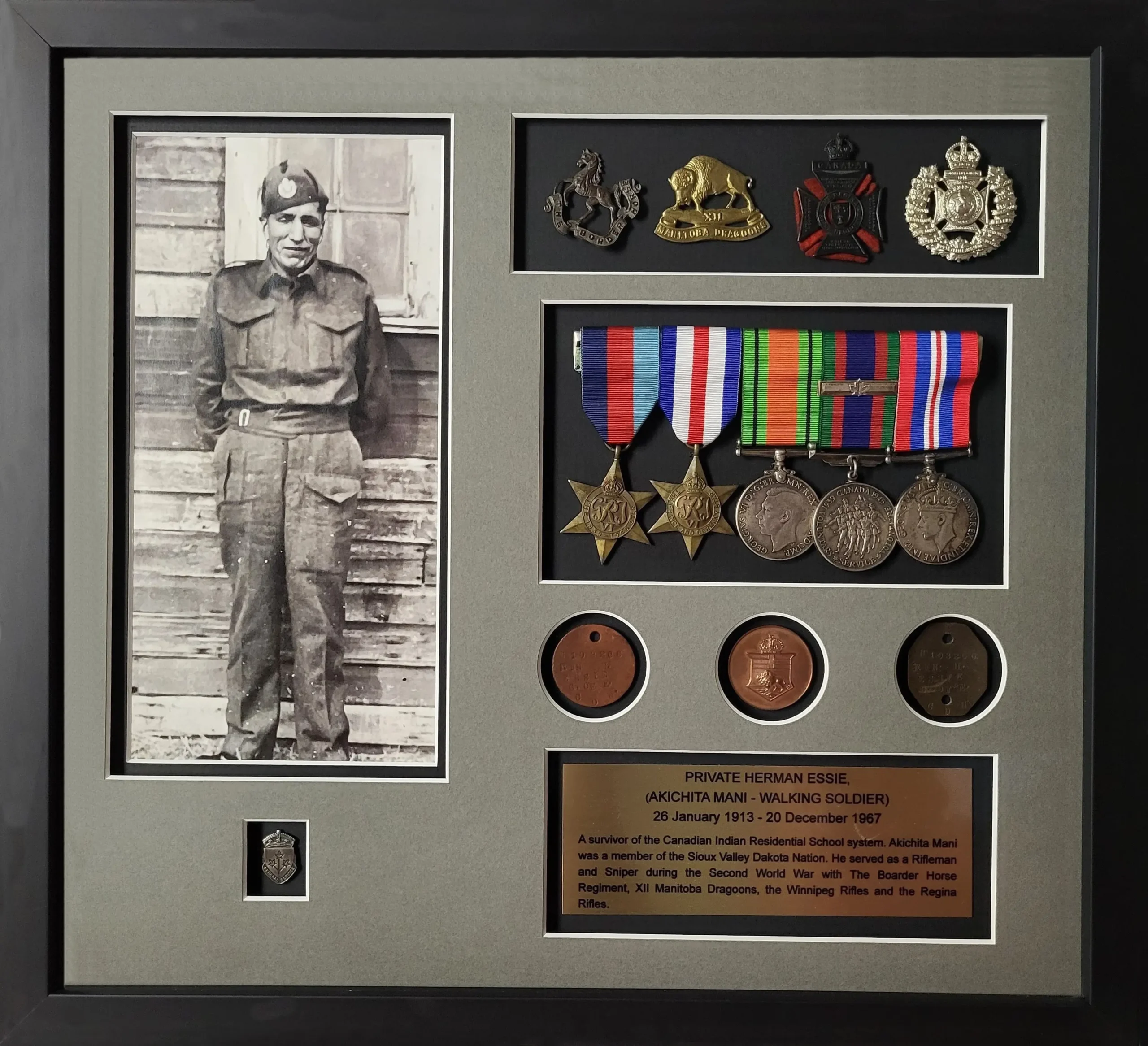
    Private Herman Essie, born in Oak River, now known as Sioux Valley, Manitoba, was a survivor of the Canadian residential school system and a member of the Sioux Valley Dakota Nation. Private Essie was a member of the Border Horse Regiment, the Royal Winnipeg Rifles, the Regina Rifles and the XII Manitoba Dragoons. The hat badges of these four regiments are on display here. Included in the shadow box are Private Essie’s medals which include the 1939 1945 War Medal, the Canadian Voluntary Service Medal with Overseas Bar, the Defence Medal, the France Germany Star and the 1939 – 1945 Star.  His identification tags, a medallion presented by the community of Oak River and a World War II General Service lapel pin are also on display.

  • Royal Canadian Artillery A4 Mantle Stone

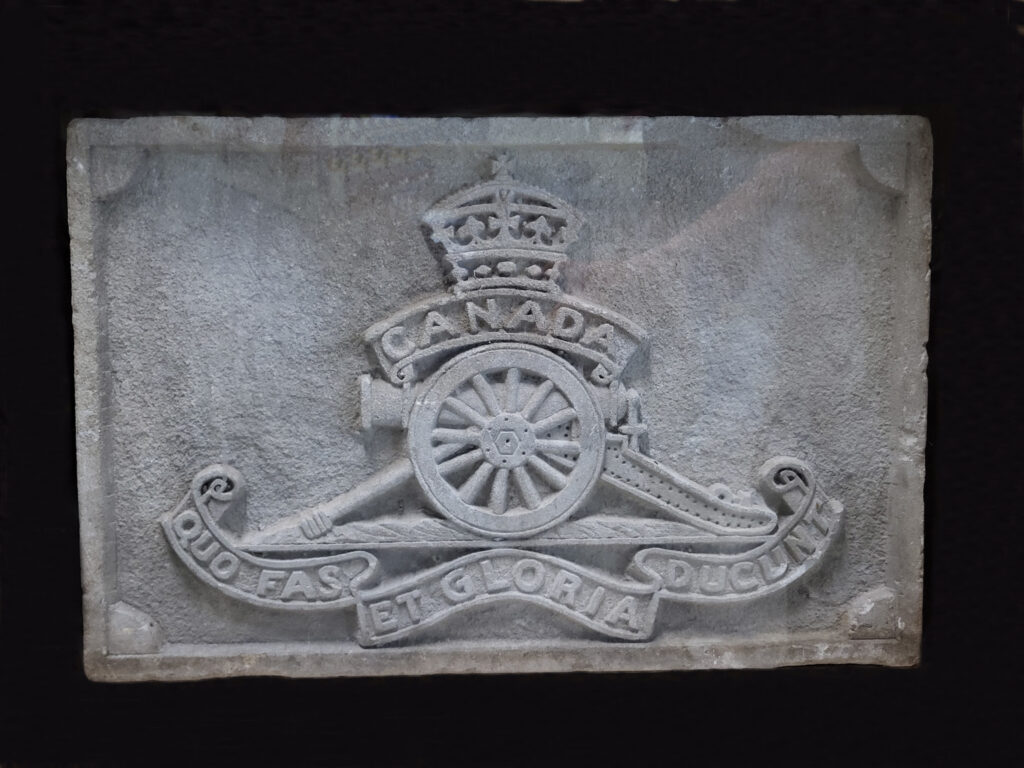
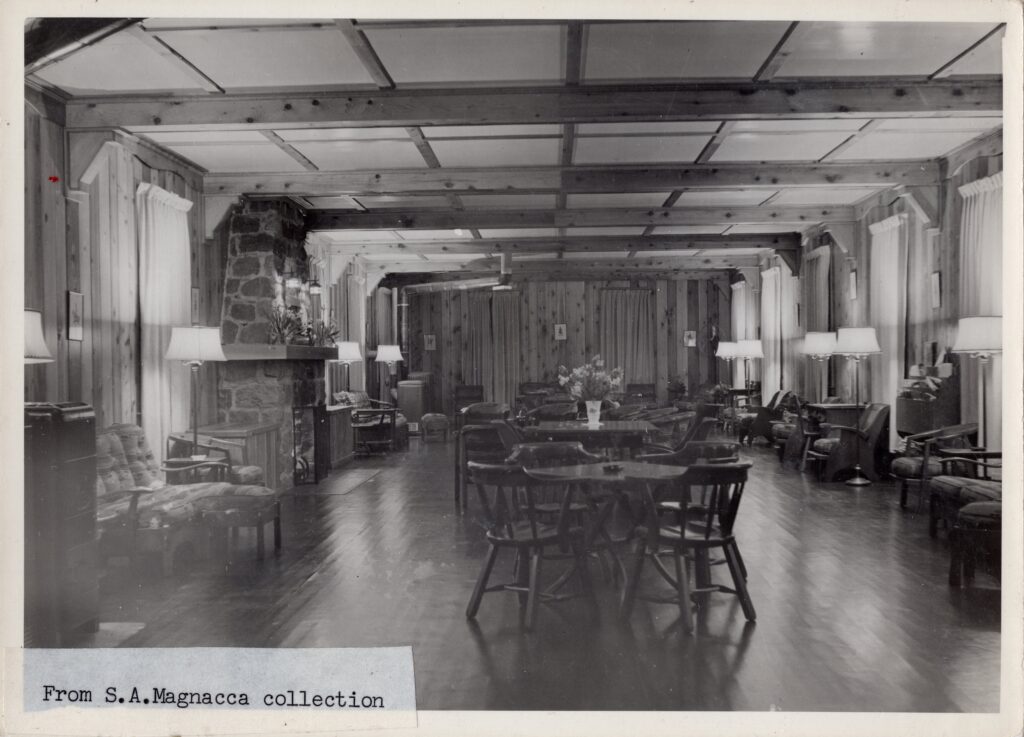
    This mantle stone, bearing the insignia of the Royal Canadian Artillery, was formerly situated above the fireplace in the Officer’s Mess in the Canadian Artillery Training Centre Number 4 (A4) in Brandon during World War II.

    Thousands of young Canadian volunteers were trained at this Centre before heading to England for more training and then to Europe and the front lines.

    Rumor has it that after this training Centre was demolished, the stone disappeared. Many years later, a Brandon resident was remodelling his yard and upon turning over what was believed to be a cement step was surprised to find the Artillery insignia. The stone was then donated to the Museum.

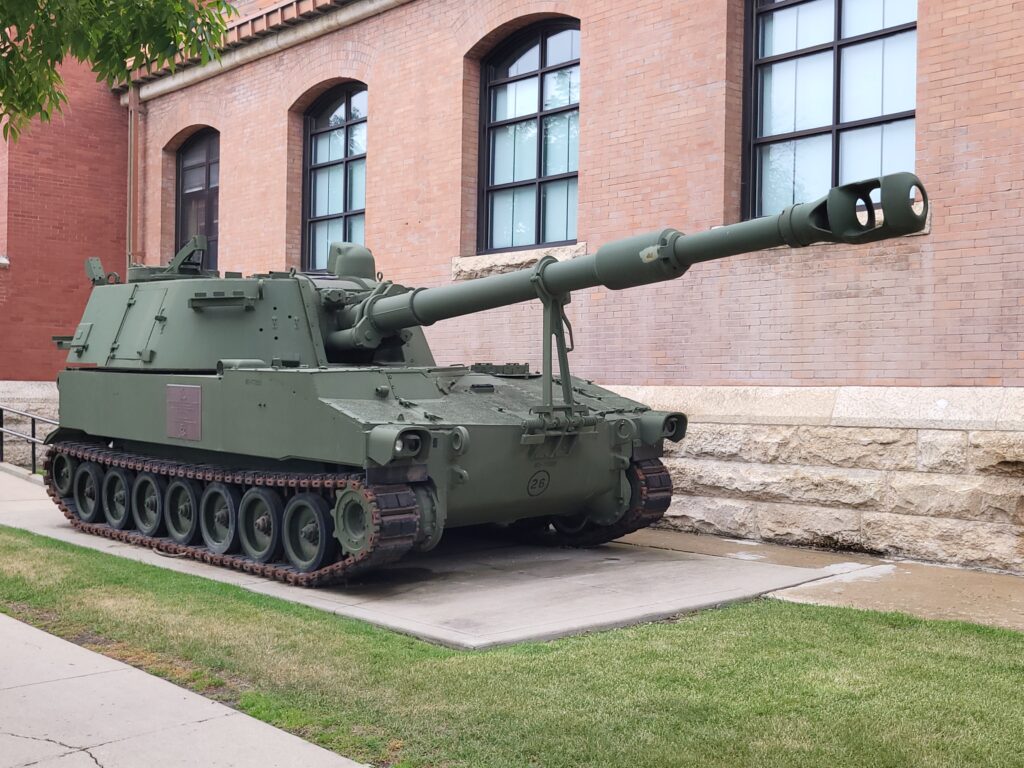
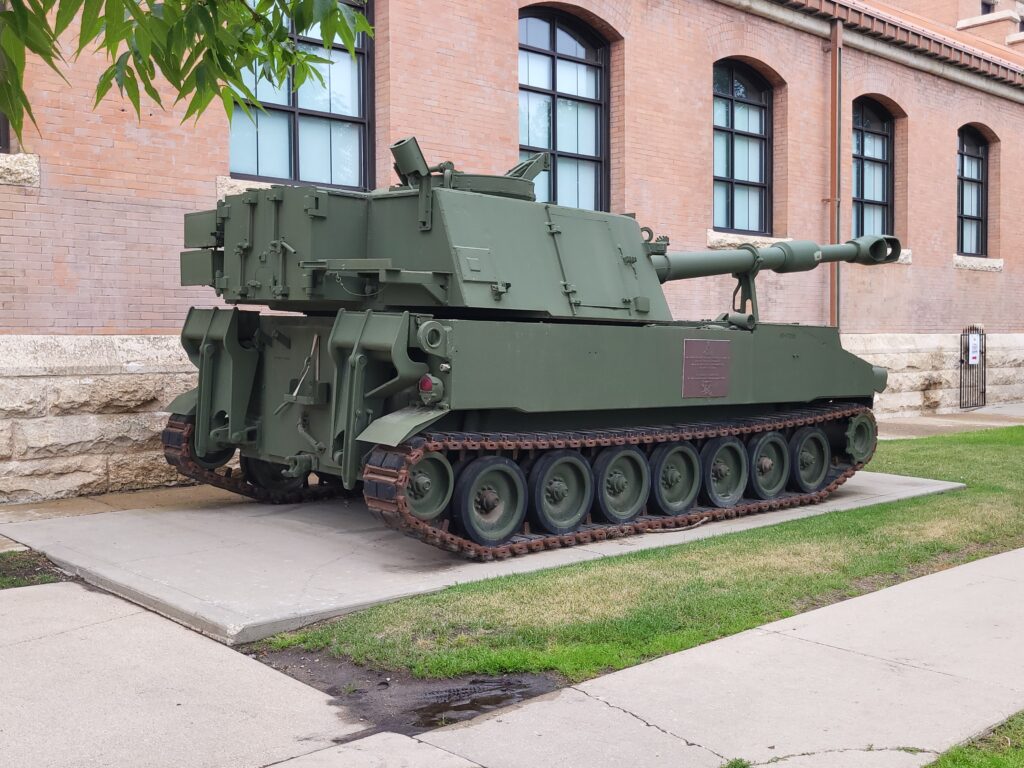
  • M109 A4 155 mm Self-Propelled Howitzer

    The M109 155 mm self-propelled Howitzer was first used by regular army field batteries in 1968 during the Cold War in Europe with Canada’s NATO Brigade Group.

                The 155 mm cannon could fire in a 360-degree circle. The secondary armament was a 50-calibre M2 heavy barrel machine gun. The M109 had a short barrel initially but modifications to improve protection and range resulted in the longer barrel version seen here called the M109 A4.

                The M109 A4 required ten gunners to operate. It had a range of 18,000 meters or 22,000 meters with special ammunition. The ammunition for the M109 was carried on a Heavy Logistics Vehicle Wheeled truck and each projectile weighed 98 pounds.

                The M109 was in Canadian service for a record 37 years – from 1968 to 2005.

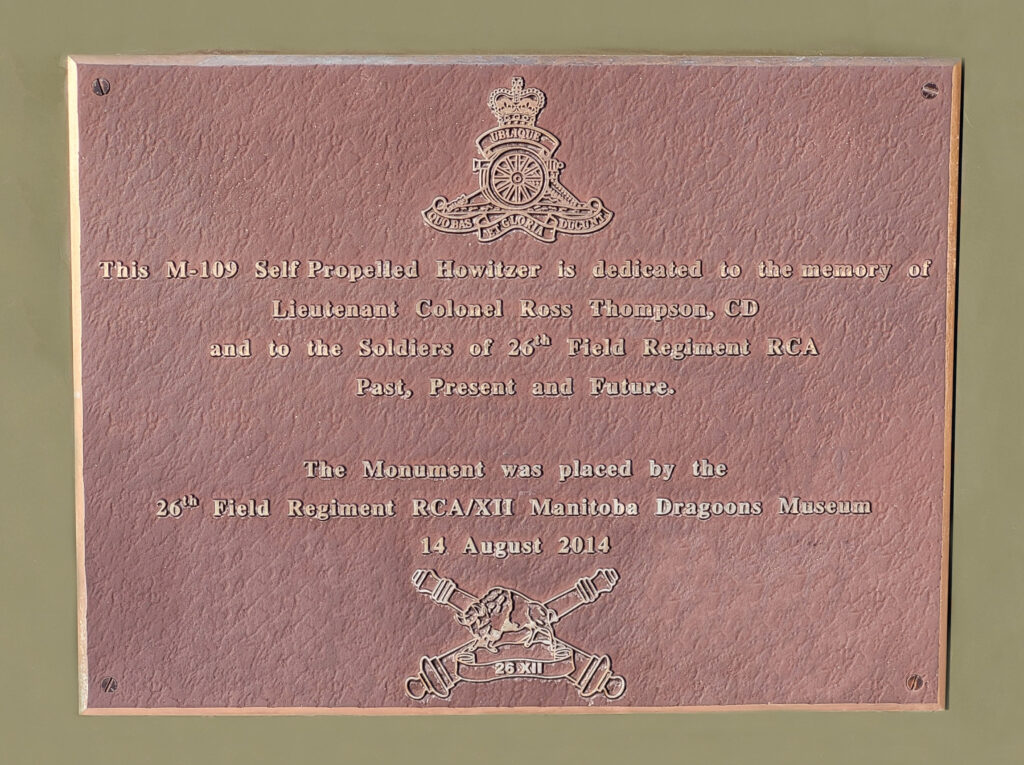
                This M109 A4 is dedicated to the memory of LCol Ross Thompson, former Commanding Officer of 26th Field Regiment Royal Canadian Artillery and to all past, present and future members of the 26th Field Regiment Royal Canadian Artillery.

  • Welcome to the Museum

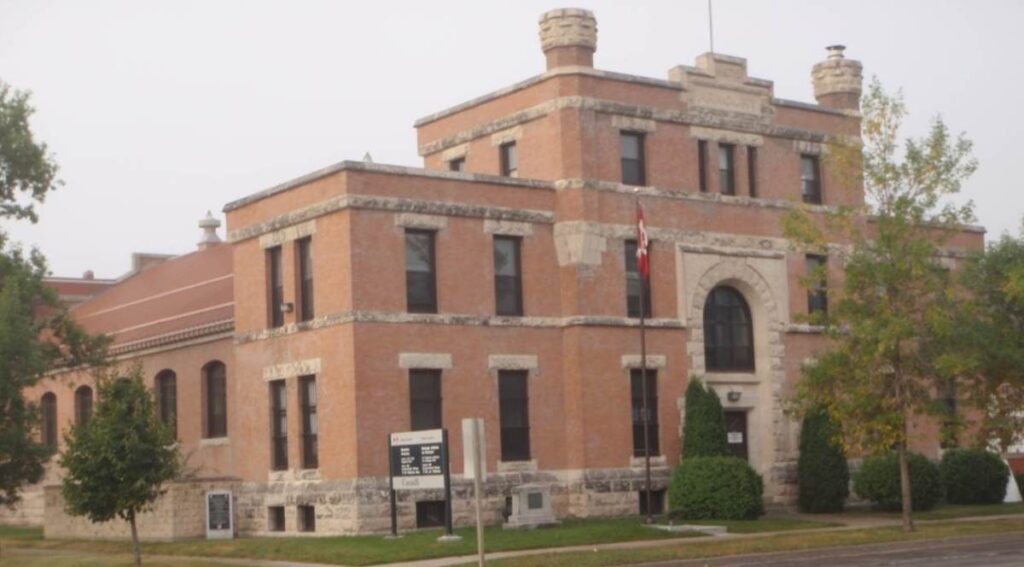
    Welcome to the 26th Field Regiment Royal Canadian Artillery / XII Manitoba Dragoons Museum. The Museum was founded in 1978 by Retired Colonel Don Berry and Retired Chief Warrant Officer Ross Neale. The Museum acknowledges that we gather on Treaty 2 territory and the shared traditional lands of Cree, Oji-Cree, Dakota, Dene, Anishinaabeg, and the homeland of the Métis nation. The Museum is housed in the Brandon Armoury. The Museum is open to the public every Tuesday from 9 a.m. to 12 noon and 1 to 3 p.m. Off-hour tours can be arranged by contacting Museum staff at 1 (204) 717-4579.

              Please use your cellphone or supplied tablet to scan the QR code corresponding to any display that interests you. Museum staff (all volunteers) will be available to answer questions and help you get started on your tour of the Museum.

              Don’t miss out on the Memorial Garden, the M109 self-propelled Howitzer and three other memorials all situated on the Armoury grounds.

              No food or drinks is allowed in the Museum. Please do not handle the artifacts.

              Thanks for visiting the 26th Field Regiment Royal Canadian Artillery / XII Manitoba Dragoons Museum and enjoy your tour. Please sign the Guest Book as you leave the Museum.

  • Indigenous Veterans Display

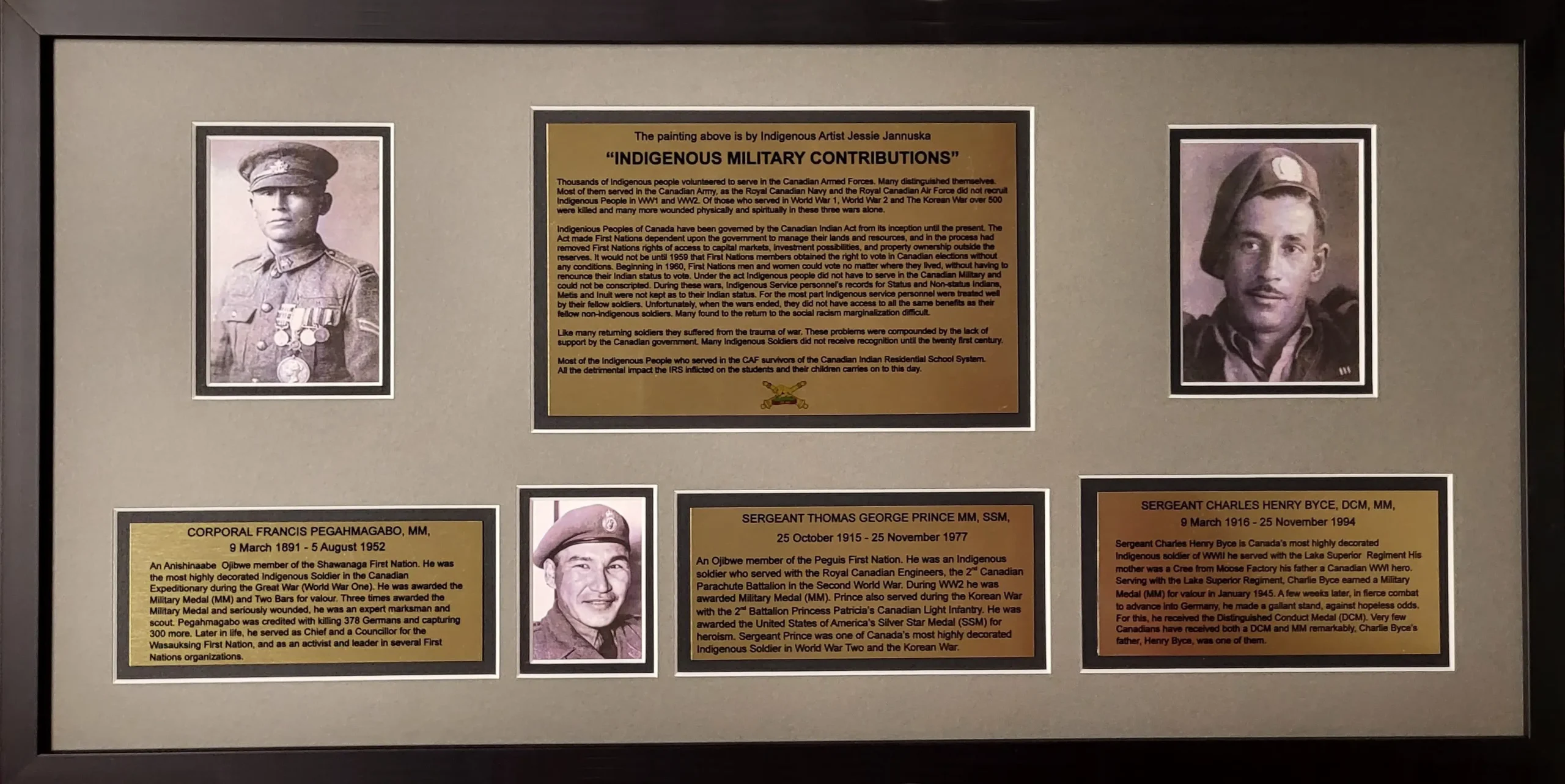
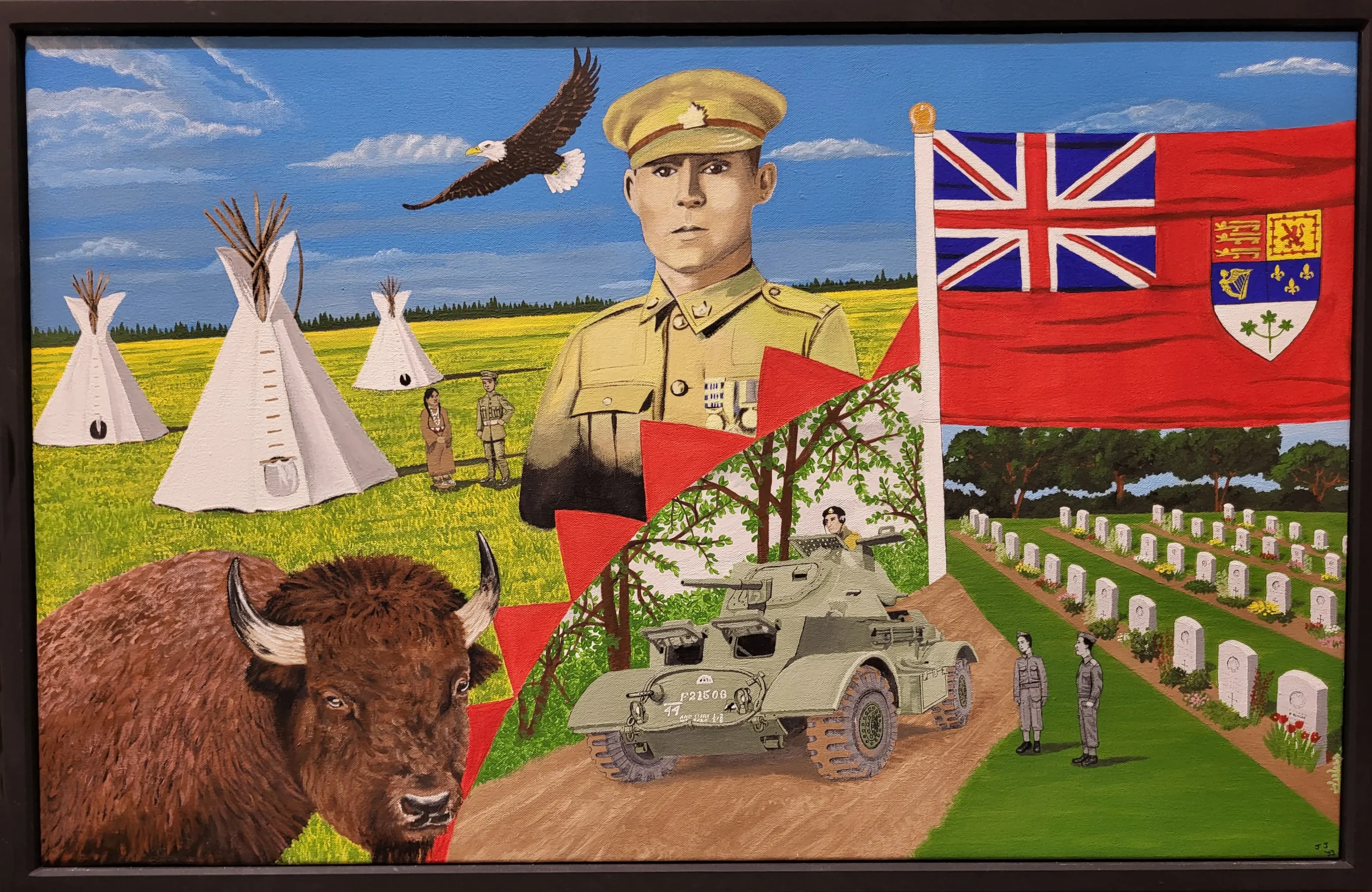
    This Indigenous display is relatively new to the Museum. To your left is a large oil painting by Indigenous artist Jessie Janusca depicting the role of the Indigenous peoples in the Canadian military over the years. Notice the sacred eagle soaring in the skies over the open grasslands and bison. The Indigenous mother sending her son off to fight in World War I symbolizes the sacrifice of the Indigenous peoples. The uniformed soldier in the centre is Corporal Francis Pegahmagabow who represents the valour and sacrifice of all Indigenous soldiers in Canada’s military. The artist’s rendition of a XII Manitoba Dragoons’ armoured car brings us to World War II, while the rows of grave markers symbolize the sacrifice of all members of Canada’s military. After both wars, Indigenous soldiers not only suffered the trauma of war, but also the overt discrimination by the Canadian government of the time.

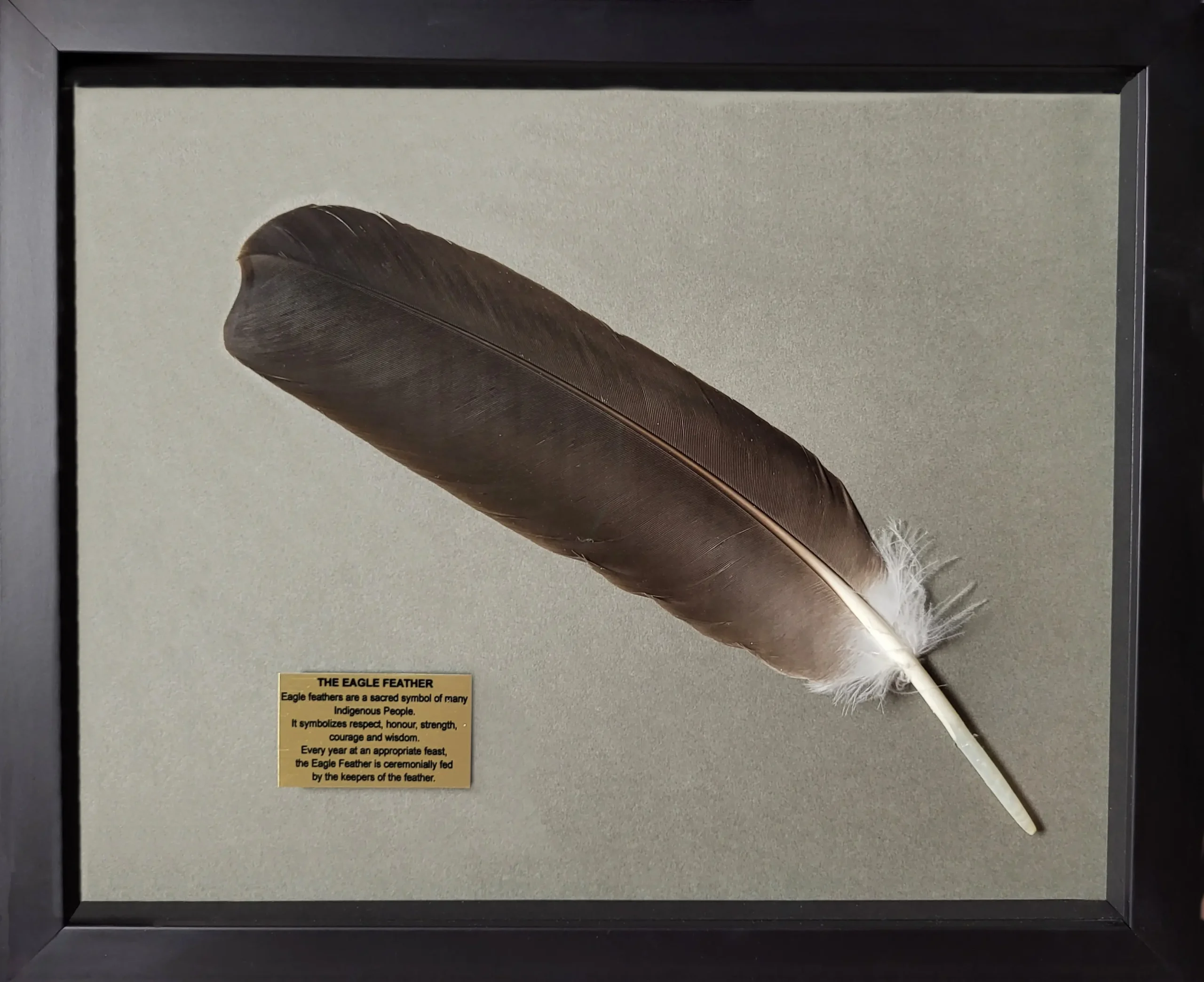
                Below this painting is a shadow box honouring three highly decorated Indigenous soldiers Francis Pegahmagabow, Tommy Prince and  Charles Henry Byce. To the right is a shadow box honouring a local Indigenous soldier Herman Essie. Below this is an eagle feather which holds great spiritual significance for Indigenous peoples. The eagle feather is used in ceremonies and rituals and is honoured as a sacred object by many tribes. The eagle feather symbolizes strength, wisdom and a strong connection to the Creator.

  • The Memorial Garden

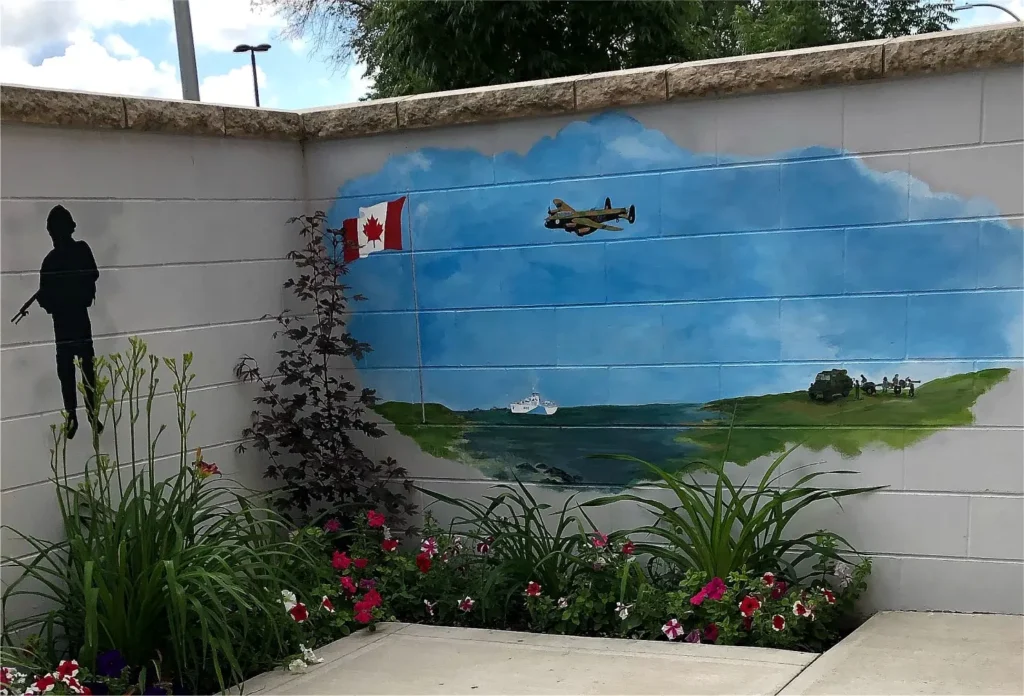
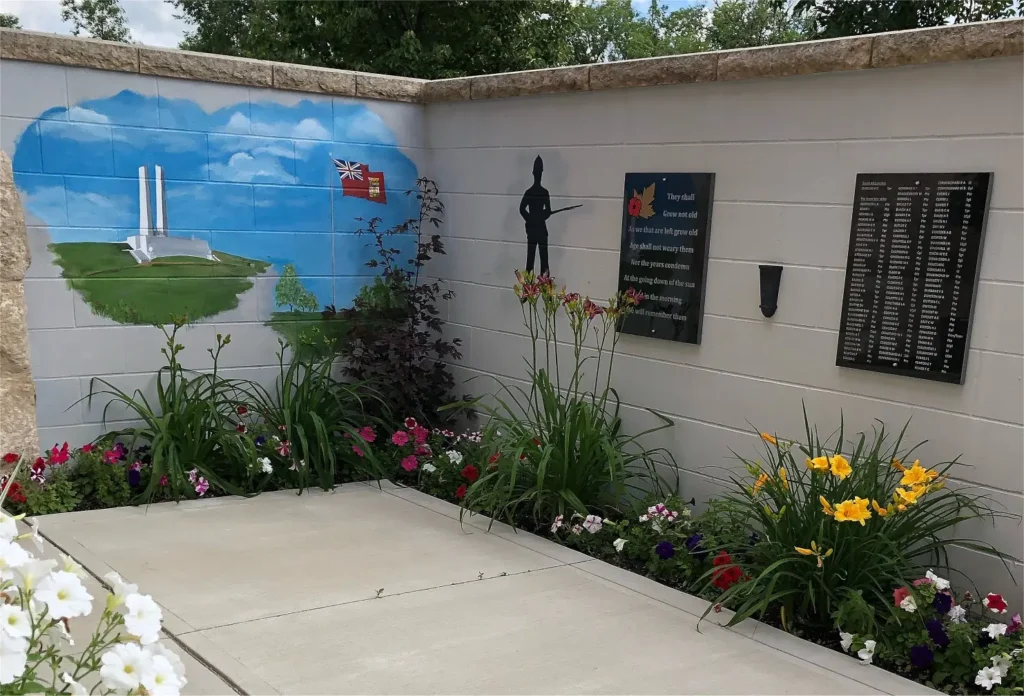
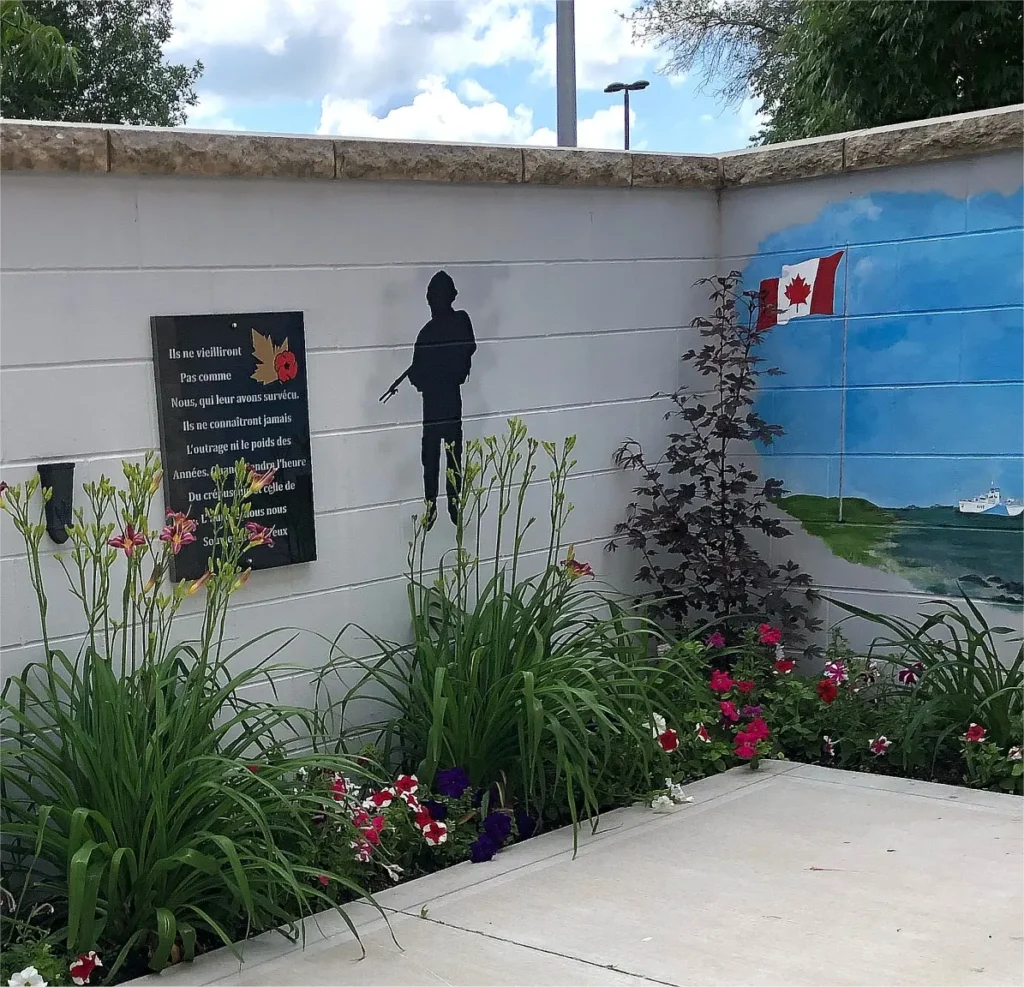
    The Memorial Garden commemorates Canadian Forces’ soldiers from Brandon and area who gave their life defending Canada and freedom. The plaques on the wall list the names of 509 soldiers who perished in conflicts from the Boer War of 1899 to the War in Afghanistan of 2001.

    Each spring, volunteers plant the Memorial Garden with beautiful flowers. All summer the flowers are maintained by museum staff. There is a small bench in the Garden and it’s a nice place to sit and take a moment to reflect and appreciate the sacrifice of so many for the freedoms we all enjoy today.

    Please take a moment to sign the Visitor’s Logbook as you leave the Memorial Garden.